
Home > INDUSTRIES > Solution >
If you are replacing filters, or specifying a dust collector for a new line, this is usually the first decision you have to make.
The short version: pleated cartridges give you more filter area in a smaller housing and much faster changeouts.
Filter bags tolerate higher temperatures, heavier dust loads, and dust that sticks.
Below is an honest comparison, including the cases where a cartridge is the wrong choice.
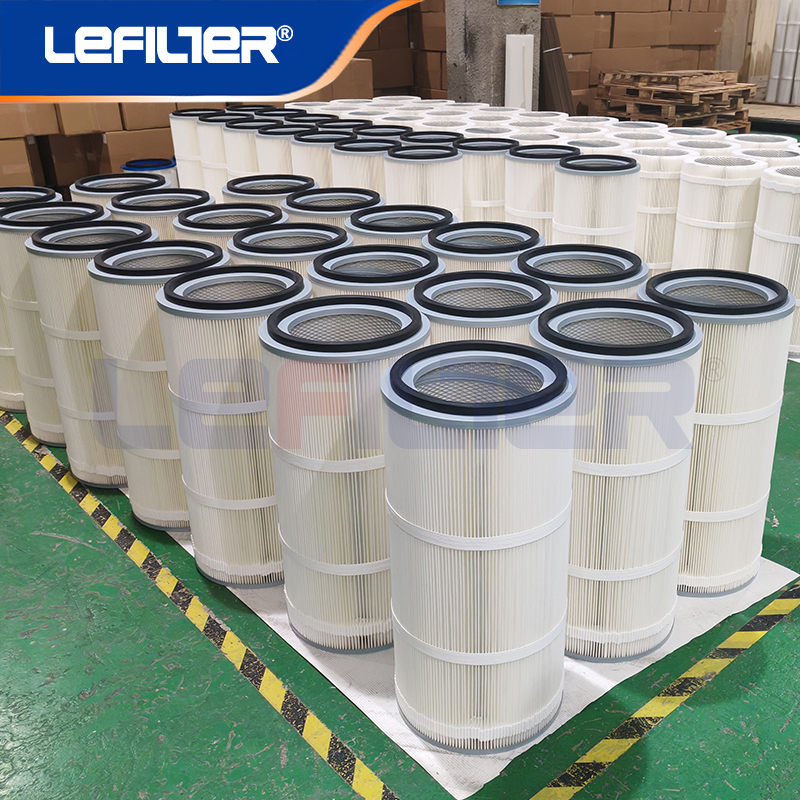
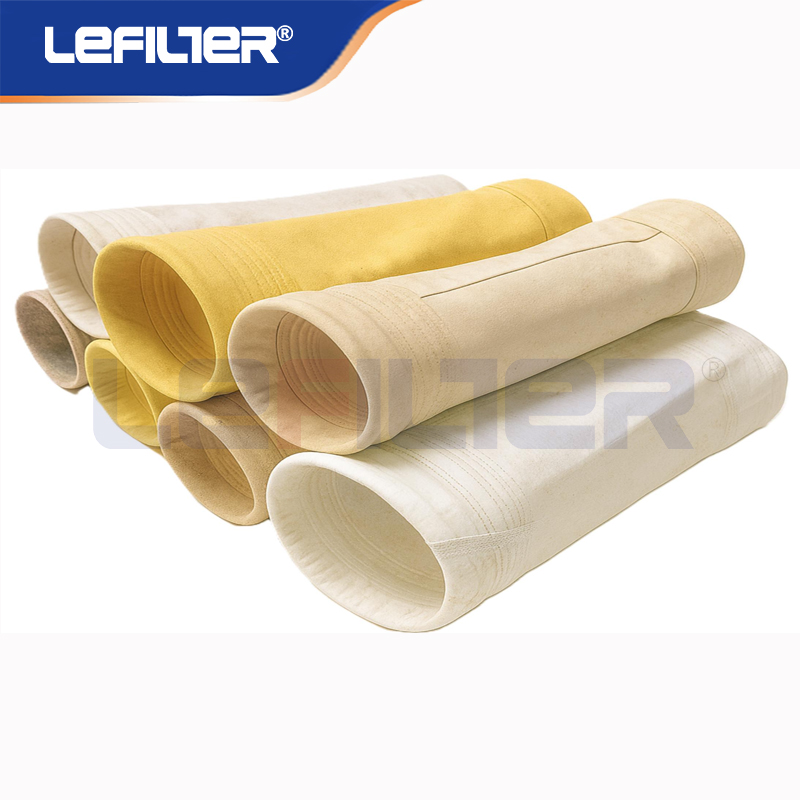
The physical difference that drives everything else
A pleated cartridge folds several square metres of media into a cylinder roughly 300–350 mm across. A bag of similar envelope size holds one flat layer of fabric.
That is why a cartridge housing can carry several times the media area of a baghouse of the same footprint — suppliers commonly quote a factor of three to four.
More area per cubic metre means lower air velocity through the media, which in turn means lower pressure drop and better fine-dust capture. It also means far less steel for the same airflow.
The trade-off is that pleats are tight spaces. Dust that cakes, sticks, or absorbs moisture has nowhere to go, and the pleat valley blinds permanently.
Side-by-side comparison
| Pleated air filter cartridge | Bag Filter | |
| Media form | Pleated, self-supporting | Flat needl-felt tube on a wire cage |
| Media area per housing volume | High (typically 3–4× a bag) | Lower |
| Housing footprint | Compact | Larger, taller |
| Changeout | Drop-in element, minutes per piece, no cage handling, usually no confined-space entry | Bag plus cage, more labour, top access, bag-to-cage fit matters |
| Typical change interval | 6–12 months in welding/fabrication; 12–36 months in light-to-moderate duty | 1–3 years with correct sizing and pulse cleaning |
| Temperature ceiling | Limited by pleat geometry, end-cap adhesive and gasket | Higher — fibreglass, PPS, P84 and PTFE bags run well above standard polyester |
| Sticky, oily, hygroscopic dust | Poor — pleats blind | Better — flat fabric releases cake more easily |
| Very high inlet dust load | Needs pre-separation | Handles it, especially with long bags |
| Fine fume (welding, laser, plasma) | Strong choice | Workable, but bulkier |
| Emission levels | Low with PTFE membrane; HEPA after-filter available | Low with membrane bags; HEPA after-filter |
| Spare-part logistics | Small, stackable, easy to stock | Bulky, cage inventory |
Where cartridges win
1. Floor space. A cartridge collector for a welding shop or a powder-coating booth often fits where a baghouse simply would not. If your plant is tight, this decides it.
2. Maintenance labour. One person can change a set of cartridges in a fraction of the time it takes to pull bags and cages. In plants where downtime costs more than the filters, that difference usually pays for the price gap within a year or two.
3. Fine and fume-type dust. Welding fume, laser and plasma cutting fume, grinding dust, and powder-coating overspray are all fine, dry and low in mass. This is the cartridge's home ground, and it is why cartridge units dominate those applications.
4. Retrofit and modular builds.Skid-mounted, modular cartridge units are easy to add to an existing line without a civil works project.
Where bags win
1. Temperature.Standard polyester bags are typically rated around 130 °C continuous, with a short surge allowance above that; higher-temperature fabrics go further. If your process exhaust is hot, bag media usually gives you more headroom, because a bag has no pleat glue line or end-cap adhesive to fail.
2. High dust concentration.Cement, mining, silica, grain, biomass boilers, and blast furnace gas cleaning are baghouse territory. Long bags plus a proper hopper give the dust somewhere to drop before it reaches the media.
3. Sticky, oily, or wet dust.Buffing compound, resin, wax, condensation, and hygroscopic powder will blind a pleated cartridge quickly. A flat bag sheds cake better, and in extreme cases a wet collector is the honest answer.
4. Abrasion and chemical attack.Heavy abrasive dust wears pleat tips first. Heavier bag fabrics, and the option to swap media without changing the housing, are more forgiving.
Where the two are closer than suppliers admit
Pressure drop. A clean cartridge usually starts lower, but a baghouse with well-tuned pulse cleaning is not automatically worse. Real numbers depend on air-to-cloth ratio and dust load, not on the filter type label.
Service life.Neither type has a fixed life. The same cartridge can last six months or three years depending on dust, hours, and how well the pulse system is maintained.
Emissions.Both reach very low outlet concentrations with a PTFE membrane and a HEPA after-filter. European rules such as EN 12779 can call for outlet levels below 5 mg/m³, and 1 mg/m³ for hazardous substances — that is a media and housing-sealing question, not a cartridge-versus-bag question.
Price per piece. Cartridges look expensive per unit and bags look cheap, but the comparison is meaningless without filter area, changeout frequency, and downtime. Compare cost per year of operation, not cost per box.
The mistake that costs the most
Choosing by purchase price, or retrofitting a baghouse to cartridges without re-checking the air-to-cloth ratio.
Air-to-cloth ratio is airflow divided by total media area. Cartridge collectors are commonly designed around 2:1 for nanofibre media and 3:1 for spunbond, because tight pleats need gentler face velocity. Drop cartridges into a housing sized for bags and you can end up pushing each square metre of media far harder than it was designed for. The filters then blind fast, pressure drop climbs, and no amount of extra pulsing fixes it — pulsing harder only wears out the solenoids.
If you are converting, recalculate the ratio, confirm the tube-sheet opening and seal arrangement, and check that compressed air capacity and pulse valves suit the new element count.
A short decision checklist
Answer these before you request a quotation:
1. Dust type, particle size, and whether it is sticky, oily, or hygroscopic.
2. Inlet dust concentration, in g/m³.
3. Exhaust temperature, continuous and peak.
4. Required airflow, in m³/h or CFM, plus your target air-to-cloth ratio.
5. Available floor space and headroom.
6. Moisture or condensation inside the collector.
7. Combustible dust? Then antistatic or conductive media, grounding, and venting or suppression come first.
8. Outlet emission limit you must meet.
Send these eight answers and any supplier can size the element honestly — including telling you when a cartridge is not the right answer.
Need a second opinion on your application?
We supply pleated cartridges and pulse-jet cartridge dust collectors for welding fume, laser and plasma cutting, metal grinding, powder coating, and general workshop dust.
If you are unsure whether your duty suits a cartridge or a bag unit, send us your dust type, airflow, temperature and a photo of the current filter or nameplate.
We will tell you which way it should go, and quote only what actually fits.
Xinxiang Lefilter Filter Co., Ltd All rights reserved Record No. : 11005909-1 prepared by Yu ICP





