
Home > INDUSTRIES > Solution >
Which Dust Collector Should You Choose for High-Temperature, Highly Humid/Sticky, or Oily Dust? A Selection Guide for Industrial Dust Collection Systems
In industrial dust collection projects, a common issue arises: while standard fabric-filter dust collectors (baghouses) perform well under normal conditions, they often struggle when faced with high temperatures, high humidity, or oily dust. These environments frequently lead to clogged filter bags, "blinding" (caking of dust on the bags), difficult cleaning processes, and, in some cases, complete operational failure.
The reason is straightforward: different types of dust impose distinct requirements on both the dust collection equipment and the filtration media.
High-temperature dust necessitates filter media with high thermal resistance; highly humid or sticky dust requires solutions to prevent condensation and material adhesion; and oily dust tends to form an oil film on the surface of the filter media, making it extremely difficult to remove the accumulated dust.
If the selection process focuses solely on airflow capacity and equipment cost—while overlooking the specific characteristics of the dust—the system may suffer from issues such as steadily increasing operational resistance and a significantly shortened service life for the filter bags.
Based on practical experience with industrial filtration equipment, these three types of operating conditions cannot be addressed with a "one-size-fits-all" dust collection strategy. Each scenario is analyzed below.
I. High-Temperature Dust: Focus on Heat-Resistant Filter Media and Cooling Methods
High-temperature dust is commonly encountered in industries such as iron and steel smelting, foundry operations, boiler systems, industrial furnaces, waste incineration, and mineral processing.
The challenges in these operating environments stem not only from high temperatures but also from factors such as complex flue gas composition, thermal shock, the presence of sparks, and the abrasive nature of the dust.
1. Which dust collector is suitable for high-temperature dust?
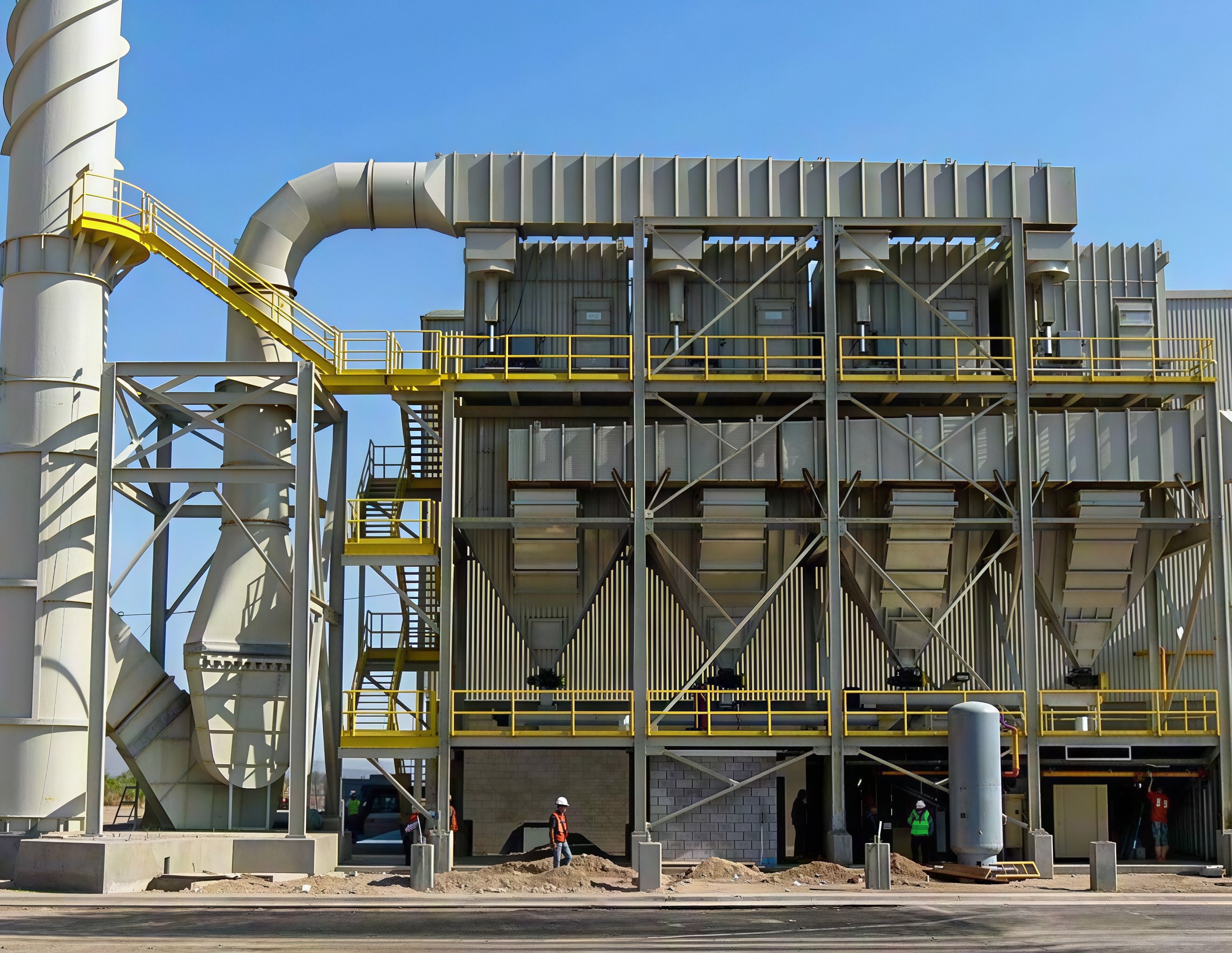
Option 1: High-Temperature Resistant Baghouse (Fabric Filter)
If the flue gas temperature falls within the permissible operating range of the filter media, and the flue gas composition is suitable for dry filtration, a high-temperature resistant baghouse may be selected.
Common filter media include:
PPS (Polyphenylene Sulfide) needle-punched felt: Offers good heat and che
mical resistance, though it is not suitable for all flue gases with high oxidative potential.
P84 (Polyimide) needle-punched felt: Suitable for certain high-temperature, dust-laden gas streams; it provides excellent filtration efficiency for fine particles.
Aramid filter media: Possesses a degree of heat resistance and is frequently used in various high-temperature industrial dust collection applications.
PTFE (Polytetrafluoroethylene) filter media: Exhibits excellent chemical and temperature resistance; the specific operating temperature limit depends on the product's structural design.
It is important to note that the maximum continuous operating temperature of a filter medium differs from its short-term temperature tolerance. When selecting materials, one should not rely solely on the "maximum temperature resistance" value stated in promotional literature.
Option 2: Ceramic Filter Tube Dust Collector
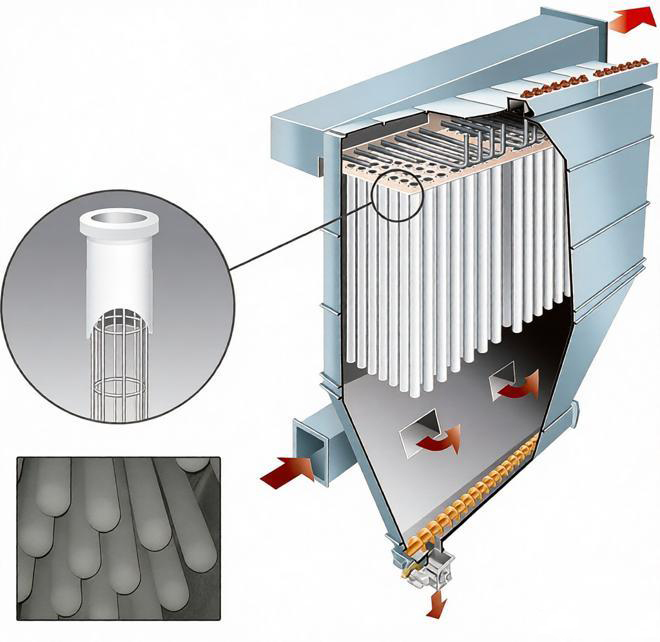
For certain industrial applications characterized by higher temperatures and suitable flue gas conditions, a ceramic filter tube dust collector may be considered.
Ceramic filter tubes offer advantages such as high-temperature resistance and corrosion resistance, making them suitable for specific high-temperature flue gas filtration systems. However, factors including investment costs, system pressure drop, cleaning methods, and the chemical composition of the flue gas require specialized evaluation.
Option 3: Electrostatic Precipitator (ESP)
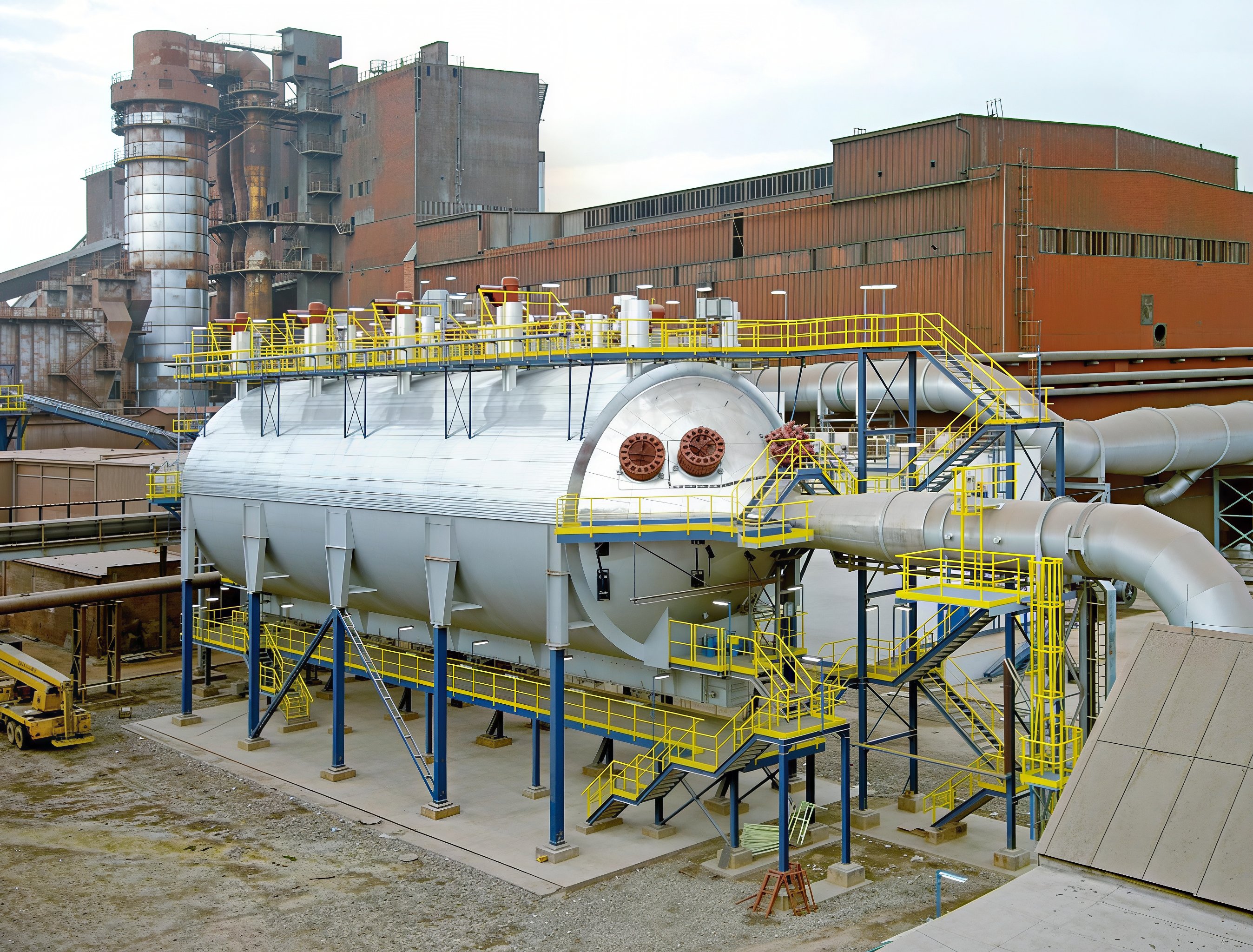
Electrostatic precipitators are a common choice for flue gas treatment systems with high flow rates, such as those used for large-scale boilers or industrial kilns.
They utilize a high-voltage electric field to charge dust particles, causing them to migrate toward collection electrodes. Since they do not rely on filter bags, there is no risk of the filter media being damaged or burned by high temperatures.
However, the performance of an ESP is influenced by factors such as the specific electrical resistivity of the dust, flue gas conditions, and the design of the equipment; therefore, they are not suitable for all types of high-temperature dust.
2. What should be considered when selecting equipment for high-temperature dust removal?
Determine the normal temperature, maximum temperature, and temperature fluctuations of the flue gas.
Calculate the flue gas dew point to prevent condensation in cooler sections of the system.
Assess the risk of sparks, unburnt particles, or high-temperature particulates entering the dust collector.
Select appropriate filter media based on the oxygen content and the presence of corrosive components in the flue gas.
Implement pre-cooling, spark arrestors, or other protective measures when necessary.
Important note: Simply introducing cold air to lower the flue gas temperature is not sufficient; one must also recalculate the dew point, total gas volume, and system operating conditions following the mixing of the air streams.
II. High-Humidity, Sticky Dust: Addressing Condensation, Filter Blinding, and Adhesion
High-humidity, sticky dust is commonly encountered in sectors such as chemical manufacturing, food processing, mineral processing, hydrometallurgy, construction materials, and various drying operations.
For equipment operators, the most significant challenge with this type of dust is its tendency to cause "blinding" (clogging) of filter bags.
Once the dust absorbs moisture or combines with water vapor, it can form an adhesive layer. As operation continues, the dust accumulates; even with regular pulses from the cleaning system, it may prove impossible to remove the buildup effectively.
1. Which Dust Collectors Are Suitable for High-Humidity, Sticky Dust?
Option 1: Wet Dust Collectors
For applications where the process stream already has high moisture content and the dust is sticky—and where there is no requirement to recover the dust in a dry state—wet dust collectors may be considered.
Common types include Venturi scrubbers, spray towers, and packed-bed scrubbers.
Venturi scrubbers, for instance, use high-velocity gas streams to ensure thorough contact between the dust-laden gas and liquid droplets, which capture the dust particles. This is ideal for processes requiring high-intensity gas-liquid contact.
The advantage here is the avoidance of "blinding"—a common issue when sticky, damp dust comes into direct contact with filter media in traditional dry-type baghouses.
However, wet dust collection generates dust-laden wastewater or sludge, necessitating auxiliary systems for sedimentation, water circulation, and solids (sludge) removal. If the dust is corrosive, the materials of construction for the equipment must also be carefully selected.
Option 2: Baghouse Dust Collectors (with Process-Specific Modifications)
It is a misconception that baghouse dust collectors cannot be used for any high-humidity dust applications.
If the dust can be kept in a dry state, and the flue gas temperature is maintained above the dew point—with an adequate safety margin—a baghouse dust collector can be a viable solution.
Key design considerations include:
Selecting filter media appropriate for the specific characteristics of the dust.
Ensuring robust thermal insulation for both the equipment and the ductwork.
Preventing condensation in low-temperature zones.
Optimizing the design of the dust hopper to prevent dust accumulation.
Properly configuring the pulse-jet cleaning system and differential pressure controls. If the dust itself is inherently highly adhesive, simply increasing the pulse-jet cleaning pressure generally fails to provide a fundamental solution to the problem of filter bag blinding (clogging).
2. Common Misconceptions in Selecting Equipment for Highly Humid, Adhesive Dust
Some users believe that opting for membrane-coated filter bags is a universal solution for all issues involving adhesive dust.
In reality, membrane-coated filter media primarily improve surface filtration and dust-release characteristics; they cannot eliminate adhesion caused by liquid water or oily substances.
Therefore, it is essential to first determine whether the dust is becoming adhesive due to moisture absorption from high ambient humidity, or because the flue gas is approaching its dew point—or even contains liquid water droplets. The solutions for these two scenarios differ.
III. Oily Dust: Addressing Oil Mist Adhesion and Filter Media Clogging
Oily dust is primarily encountered in processes such as machining, metal cutting, rolling, oil mist management, and certain chemical production operations.
Such pollutants are rarely simple solid dust particles; rather, they consist of a complex mixture of oil mist droplets, solid particles, and gaseous oily substances.
If a standard fabric-filter dust collector (baghouse) is used to process an oil-laden airstream, the oil mist tends to adhere to the surface of the filter bags, forming an oily film. This mixture of dust and oil makes the cleaning process significantly more difficult and, in severe cases, leads to the clogging of the filter bags.
1. What type of dust collection equipment is suitable for oily dust?
Option 1: Oil Mist Filters
For oil mist generated during machining, specialized oil mist filters are the preferred choice.
These units typically employ a multi-stage filtration structure:
Primary filtration: Captures larger oil droplets and particles.
Intermediate filtration: Uses coalescing filter media to capture fine oil mist, causing it to coalesce into larger droplets.
Final filtration: Provides further treatment for any remaining fine oil mist.
The separated oil can be collected via a drainage system and, in some operational scenarios, recovered for reuse.
The specific number of filtration stages and the configuration of the filter media are determined based on factors such as oil mist particle size, the properties of the oil, and the required airflow volume.
Option 2: Electrostatic Oil Mist Purifiers
Electrostatic oil mist purifiers use an electric field to charge oil mist particles, which are then captured by collection electrodes.
These units offer relatively low filtration resistance, making them suitable for certain machining environments where oil mist is generated continuously.
However, the collection components require regular cleaning. Furthermore, it is essential to evaluate the flammability of the oil mist, potential fire risks, and electrical safety requirements. Such equipment must not be used in environments containing flammable or explosive oil mist without a thorough risk assessment.
Option 3: Combined Filtration Systems for Oil Mist and Solid Dust
If a production process involves both oil mist and metal dust (or other solid particles), a multi-stage filtration system should be designed based on the specific composition of the pollutants.
Typically, this involves pre-separating larger particles, followed by the removal of oil mist, and concluding with a final stage of high-efficiency (fine) filtration. You cannot simply entrust all pollutants to a single set of standard filter bags.
IV. Why do some dust collectors perform well initially but develop issues after a period of operation?
In practical industrial filtration applications, problems with dust collection equipment often stem not from the equipment itself, but from inaccurate initial selection or an incorrect assessment of operating conditions.
Common issues include:
1. Filter bag burnout: The maximum flue gas temperature was not accurately determined, or temperature fluctuations exceeded the limits of the filter media.
2. Filter bag blinding (clogging): Flue gas temperatures fall below the dew point, causing condensation, or the dust itself contains moisture and sticky substances.
3. Incomplete dust removal (ineffective cleaning): Dust adheres too strongly, forming a hardened, compacted layer on the surface of the filter bags that cannot be removed by standard pulse-jet cleaning.
4. Excessive equipment resistance (pressure drop): Caused by insufficient filtration area, excessively high filtration velocity, inappropriate filter media selection, or issues with the cleaning system.
5. Shortened filter bag lifespan: Resulting from highly abrasive dust particles, corrosive flue gas, or abnormal operating conditions.
Therefore, when selecting a dust collector, one should not focus solely on the equipment's appearance, model, or price; a thorough analysis of the operating conditions beforehand is essential.
V. Conclusion: Choosing the Right Filtration Method is Key to Managing Specialized Dust
High-temperature, high-humidity/sticky, and oily dust represent three typical categories of specialized industrial dust-handling scenarios.
While all fall under the umbrella of "dust issues," the strategies for addressing them differ significantly:
For high-temperature dust, the focus is on heat resistance and managing temperature fluctuations.
For high-humidity, sticky dust, the focus is on preventing condensation and adhesion, and ensuring effective dust removal.
For oily dust, the focus is on the coalescence and separation of oil mists, as well as preventing the clogging of filter media.
For manufacturers of filtration equipment, a truly professional selection process goes beyond simply recommending a unit; it begins with a detailed assessment of the client's actual on-site operating conditions, followed by the determination of the appropriate filter media, filtration area, cleaning mechanism, and equipment configuration.
The right dust collection equipment should not only meet initial filtration requirements but also ensure long-term operational stability, thereby reducing the frequency of filter bag replacements, minimizing equipment downtime, and lowering long-term maintenance costs. If your production environment involves high-temperature flue gas, damp or sticky dust, or oil mist, it is advisable to conduct an operational analysis before selecting equipment; this helps avoid the need for additional investment resulting from an improper choice.
Xinxiang Lefilter Filter Co., Ltd All rights reserved Record No. : 11005909-1 prepared by Yu ICP





