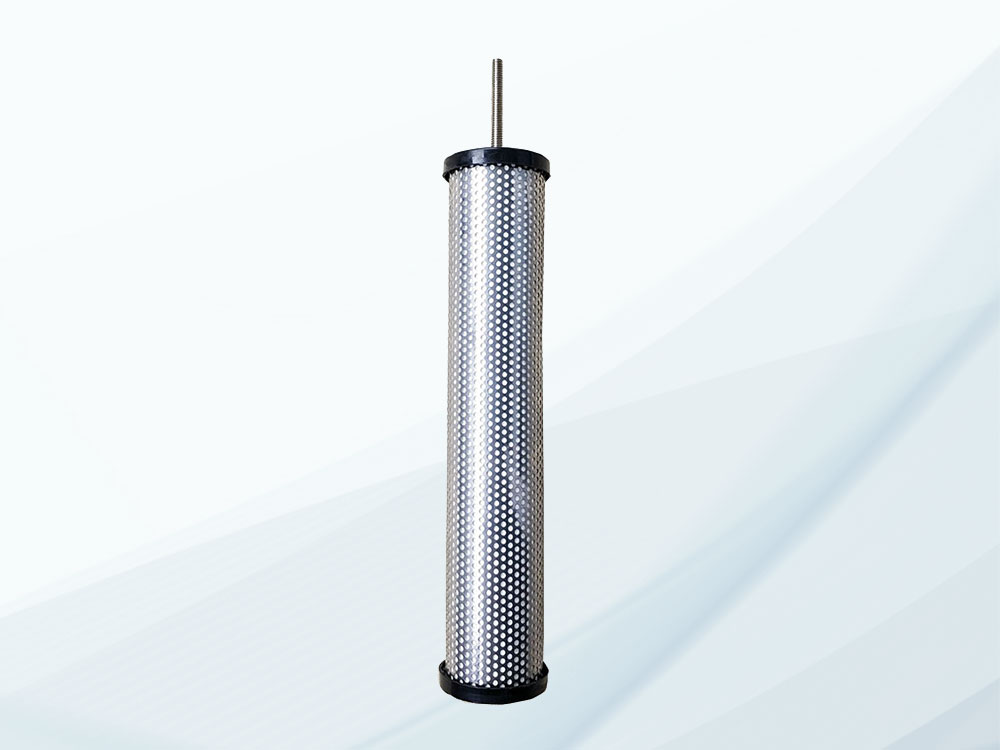
The principle of air filter to filter dust1. Irregular Brownian motion function: Tiny particles do random Brownian motion in the air, and stop after hitting the filter medium.
2. Intercepting effect: Particles with larger particle sizes in the air cannot pass through the air filter and are thus intercepted.
3. Gravity settling effect: Due to the effect of gravity, larger suspended particles will settle during the movement.
4. Inertial effect: Suspended particles hit the air filter due to inertial effect and are intercepted.

Detailed explanation of the principle of air filter dust filtration:
Principle 1. Intercept
Interception is a common filter principle. This principle is like the sieve we use every day, filtering what we don't need from above, so as to keep what we need and let us go. Although it looks like a sieve, purification experts also pointed out that the filter is more detailed and clear-cut than the sieve. After all, the responsibility of purifying the environment is not that simple.

Principle 2. Inertia
Inertia is a common flow in physics. For example, most of the current filters use the inertial principle we often say, using the inertial motion between molecules to discharge them from the vents, thereby purifying the surrounding environment. But what about the collision movement sometimes? Although it is a question, it is used as the working principle of the filter, because the collision of any object will produce waste products, which are of course purified.

Principle 3. Static electricity
This is a clever combination of filters. Although the principle seems simple, we also admire the designer, because he has rewritten the history of filters and brought purification technology into a new field.